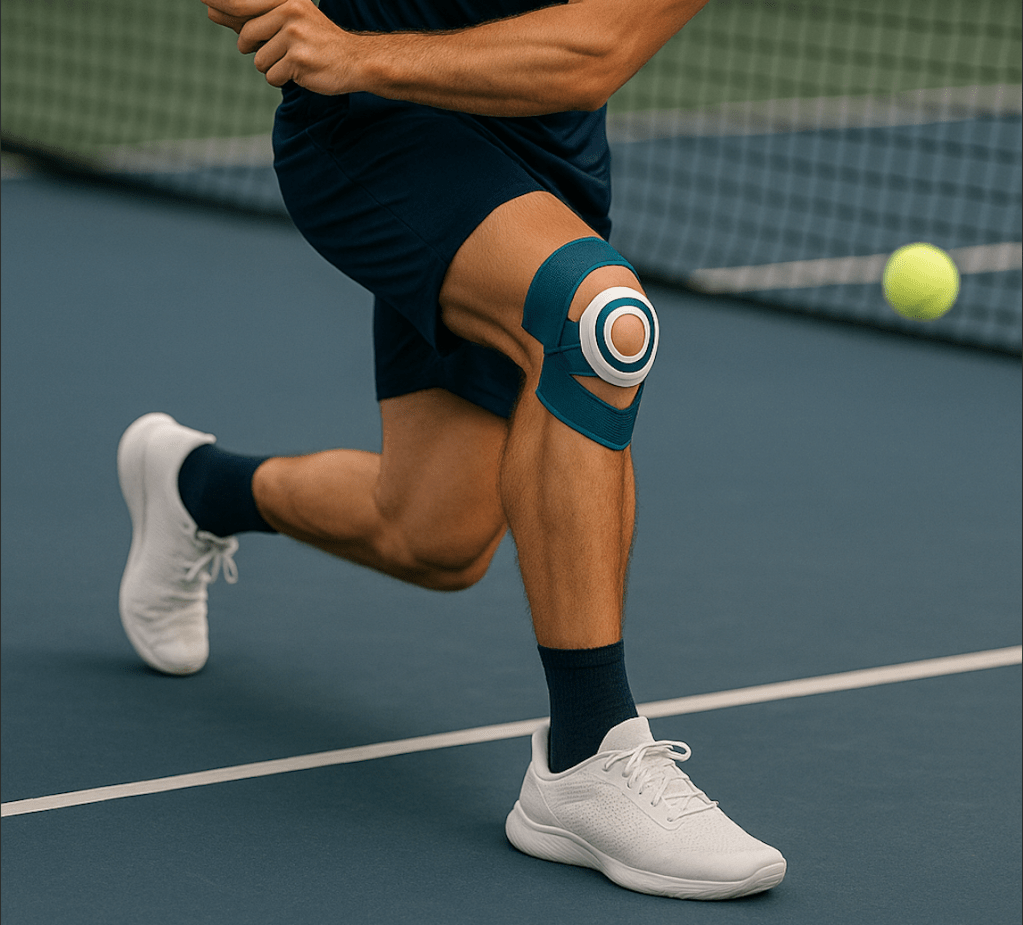
As we age, many of us have the experience of our knees “breaking down”. When you are young, you can hop off the couch and play a game of pick-up basketball, go run 5 miles, and squat heavy weights in the gym without a second thought about your knees. However, as you age, your knees give you a harder and harder time when doing these activities. It usually starts with a few nagging pains that resolve quickly with rest or ice, then it progresses to prolonged aching, redness, stiffness, and swelling after doing high impact activities. Eventually, your knees are stiff and painful after light activities, such as walking, or even after doing nothing at all, and they begin to creak and pop as you wake up in the morning and go about your daily life. Ultimately, these knee problems become so frequent that you cannot participate in daily life and you are forced to get injections or knee replacement surgery. The degenerative process of knee breakdown over years is called osteoarthritis, and this article is Part 1 of a series diving deep into why osteoarthritis happens and why your knees breakdown over time. Here I will explore the concept of mechanical loading, and how it plays a role in the pursuit of lifelong knee health.
Mechanical Loading and the human body
Mechanical loading refers to the forces transmitted when one object comes into physical contact with another object. When a mechanical load is placed on an object, it can cause that object to stretch, compress, bend, twist, or break with the result depending on 3 factors: 1) the intensity of the mechanical loading (light or heavy), 2) the time-frame the mechanical loading (acute or chronic), and 3) the quality of the object (is it strong? brittle? elastic?). To give some examples of how these factors interact, imagine I have a bowling ball and I drop it onto a pane of glass. This glass will shatter because the bowling ball is heavy, all of its weight hit the glass instantly (acute loading), and the glass is very brittle. Now what if I took that same bowling ball and I dropped it on a trampoline? The trampoline would stretch in response to the heavy and acute impact of the bowling ball, but it would not break because it is strong and highly elastic. Instead of dropping the bowling ball, what if I just rested it on top of the trampoline? The heavy bowling ball would apply weight the the trampoline over a long period of time (chronic loading) to slowly deform and stretch the elastic of the trampoline. Lastly, Imagine I used a feather instead of a bowling ball in all of these examples; what would happen? Likely nothing! The feather is too light to cause any real change to whatever it comes in contact with.
Tissues for the human body, such as bones, ligaments, and cartilage, will respond to mechanical loading in a very similar way. When you place loads through your body, your tissues will react by stretching, compressing, bending, twisting, or even breaking. However, there is one big difference between the tissues of your body and every day objects: the tissues of your body will react and adapt to the loads that are placed on them in an attempt to meet the needs of your daily activity. Most of you are probably familiar with this effect. We all know that if a person places heavy loads through their arm muscles by doing bicep curls with heavy dumbbells, then that person’s arm muscles will get bigger and become stronger in response to this loading. Similarly, if that person were to stop exercising their arm muscles completely, then their muscles would shrink smaller and become weaker from disuse. What you may not appreciate is that nearly all tissues in the human body, including bones, tendons, ligaments, and cartilage, are able to sense mechanical loading and adapt to those loads by changing their physical qualities.
Putting all of this together, the muscles, bones, tendons, ligaments, and cartilage of your body will begin to breakdown and waste away without any mechanical load, but they will also begin to breakdown if they are exposed to excessive loads which are damaging to the tissue. Said another way, we need to maintain the mechanical loads placed through our tissues within the “Goldilocks zone” where loading is neither too little or too much, but it is just right. We target this goldilocks zone by changing how heavy we load the tissue and how often or how long we load that tissue.
Nearly all tissues in the human body, including bones, tendons, ligaments, and cartilage, are able to sense mechanical loading and respond by growing, shrinking, getting stronger, or becoming weaker.
We need to maintain the mechanical loads placed through our tissues within the “Goldilocks zone” where loading is neither too little or too much, but it is just right.
What does mechanical loading have to do with my knees?
As we’ve discussed, hitting the “goldilocks zone” of mechanical loading plays a key role in the health of nearly all of the tissues in our bodies, but what makes it so important for knee health?
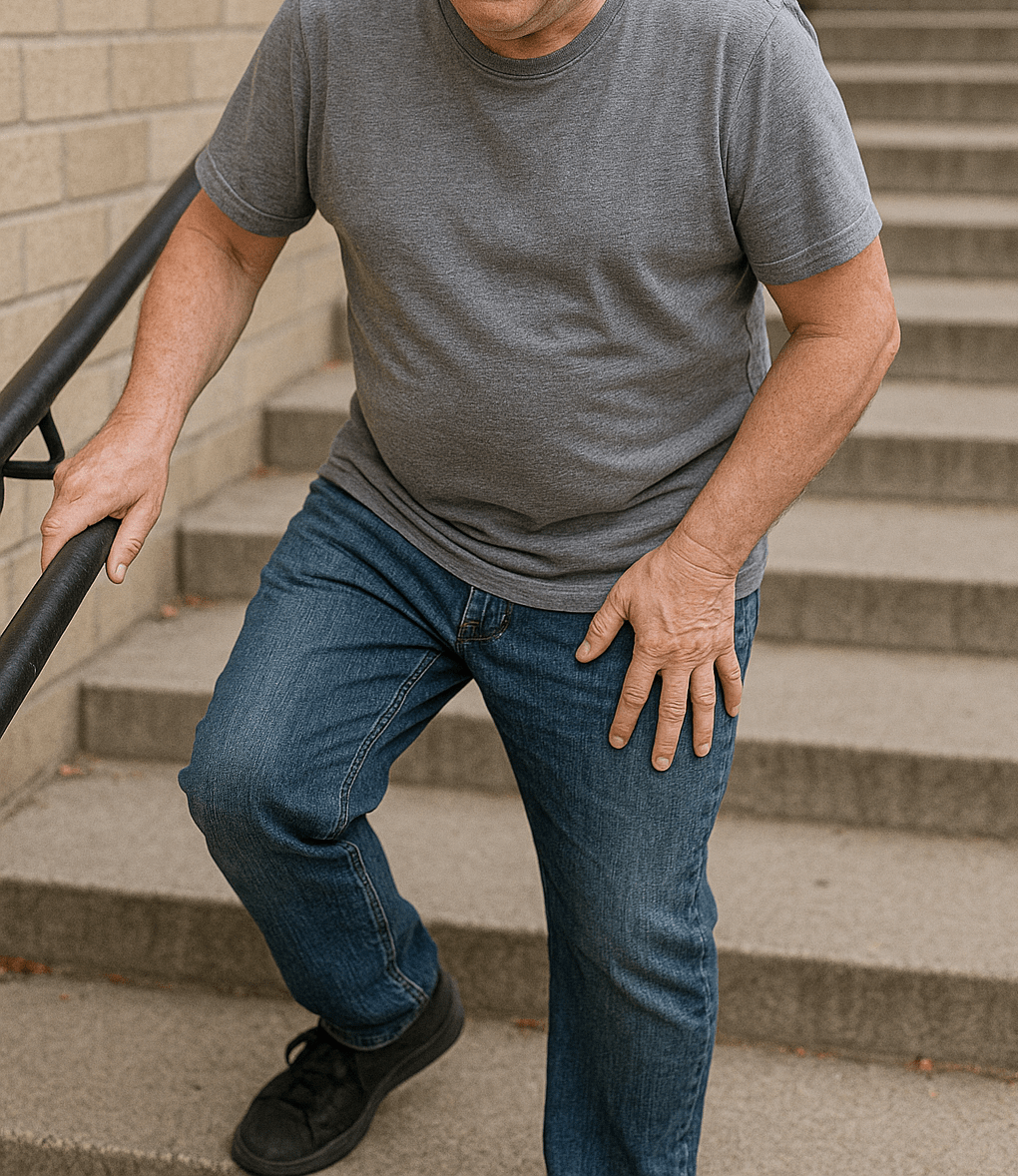
The first reason that mechanical loading is so critical for knee health specifically is that your knees are one of the primary weight-bearing joints in your body. Nearly everything that you do throughout your day-to-day life places loads through your knees. When you are walking, climbing stairs, squatting, or jogging, your knees need to handle hundreds, or even thousands, of pounds. Because we need to load our knees so frequently, and these loads are often very heavy, there is much less margin for error. If you are loading your knees wrong, it will begin to cause issues, and once you start to have issues, you will have trouble with most of your daily activities.
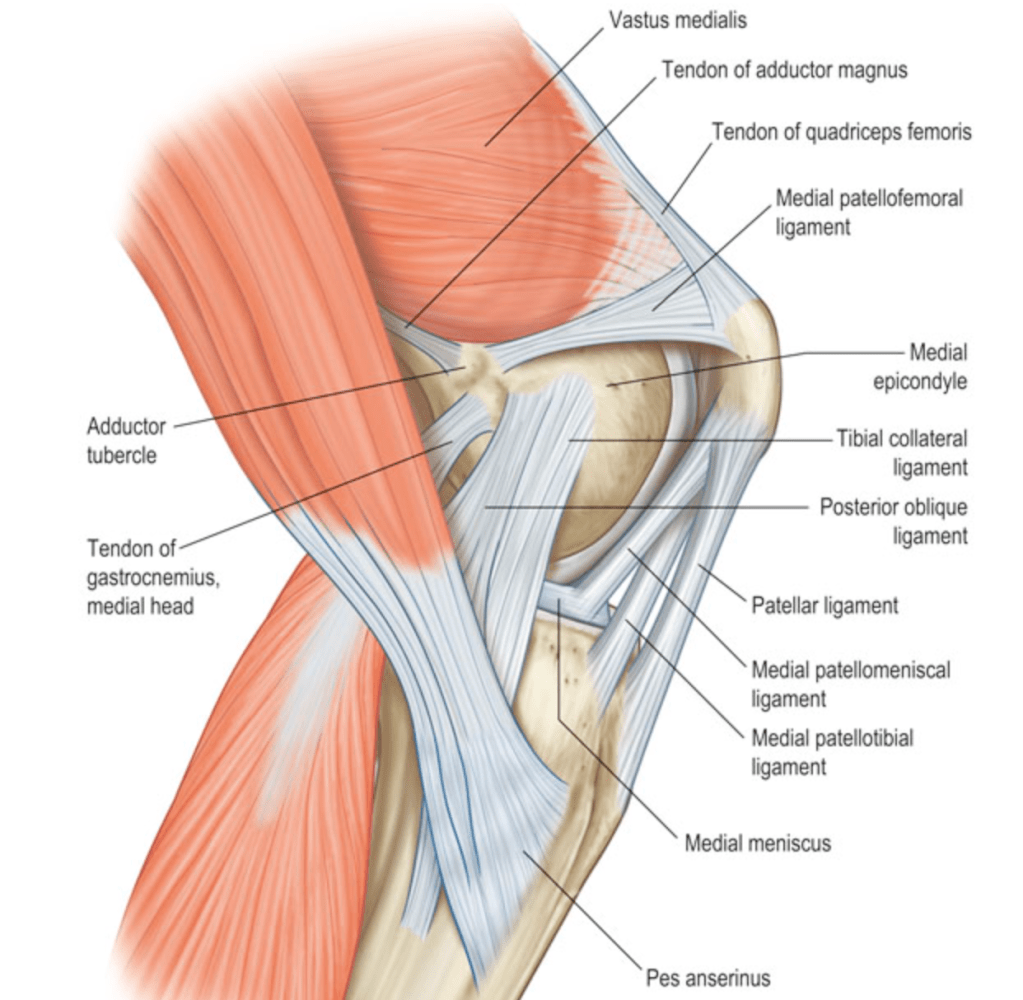
The second reason that mechanical loading is so critical for knee health is related to the primary shock absorber: the articular cartilage. The articular cartilage is the smooth padding which allows the bones in your knee to move past each other easily and comfortably, and the breakdown of this cartilage is the hallmark of osteoarthritis (see here or here for more detail). The trouble with the articular cartilage is that the “goldilocks zone” for this tissue is very narrow, meaning it is easy to load the cartilage too little or too much and cause damage. Further, it is difficult to recover articular cartilage health once it has been damaged. Other tissues around the knee joint, like your muscles, can take a beating and bounce back without skipping a beat, but the articular cartilage is much more tricky. For this reason, we must be intentional when loading our knees so that we can prevent damage, and bounce back from any damage that occurs.
How does mechanical loading contribute to knee breakdown?
Mechanical loading plays a crucial role in knee health because your knees bear significant amounts of loading with every task and the articular cartilage has such a narrow “goldilocks zone” for mechanical loading to help it stay healthy, but exactly what kinds of loads are damaging to the knees?
This first type of loading which we know can result in knee degeneration is acute overloading. This occurs when your knees experience a very high load over a short period of time. This may occur during a sports injury, a car accident, or a fall. Very high impact loads can cause immediate damage to the articular cartilage (and other structures) in your knee to set off a cascade of damaging effects leading to early osteoarthritis (degeneration).
Another why loading may damage the knees is through chronic overloading. This is not a single injury which damages the cartilage, but excess loads experienced by the knee joint over a long period of time. Upon hearing this, many of you may be thinking of the classic case of the long distance runner who develops bad knees over their life-time. While this is a good example of chronic overloading, we must also consider overloading associated with poor movement patterns during activity (like that which contributes to patellofemoral pain syndrome), bony deformities (like being “bow-legged”), long-held static positions (sitting with your knees bent all day), or even obesity which can over-load the knees with every step.
Overloading may be the first thing that comes to mind when you think of joint degeneration, and this is probably due to the pervasive idea of “wear-and-tear” on the knee joints causing osteoarthritis. However, chronic underloading is also a common mechanism which causes your knees to break down. Just like a muscle that gets smaller without regular exercise, the cartilage in your knees begins to breakdown without regular physical activity. As your articular cartilage becomes weaker and thinner through a sedentary lifestyle, the “goldilocks zone” for healthy loading becomes more narrow and more difficult to hit. This makes it so that loading that was once healthy for the knee joint becomes damaging.
This brings me to the last pattern of loading which contributes to knee breakdown: a combination of underloading and overloading. Imagine a typical person in the developed world who spends 8 hours a day sitting at the desk, takes an hour commute sitting in the car, and then comes home to sit on the couch and watch TV. This chronic underloading with cause the articular cartilage to breakdown hour by hour, day by day. Then, this person decides they want to play a friendly tennis match on the weekend, and all of the sudden they are pounding their feet on the tennis court putting hundreds of pounds through their knees. This persons atrophied cartilage from being sedentary all week is now experiencing overloading which contributes to greater knee breakdown. What if this person was obese? or walked with poor mechanics? or they were “bow-legged” or “knock-kneed”? All of these factors would contribute to that weakened cartilage experiencing excessive loads every time that person stood up to move around.
How should the knees be loaded to create long-term health?
If both excessive loading and underloading can cause the knees to breakdown, how do we know exactly where the “goldilocks zone” is?
Well that depends highly on the quality of your own tissues. If you have tissues which are weak, frail, and brittle from years of disuse, those tissues may have a very low tolerance for loading and would need light activities to begin building up. If you have had a recent injury or traumatic event, you may need to be very careful returning your knees to full load. However, if you have a long history of daily exercise and physical activity, your knees may be able to withstand more rigorous loading before it becomes damaging.
So unfortunately, the true answer is: It Depends…. However, I won’t completely waffle on this question and leave you with nothing but “it depends”
A great rule-of-thumb for keeping your knees healthy is to engage in regular, low to moderate physical activity every single day (if not quite a few times a day). The cartilage in our knees thrives on low load, frequent, cyclical activities, so activities like walking and cycling performed once or twice a day will do wonders for your knees. Beyond that, be sure to stay moving throughout the day, don’t let yourself sit at a desk for 4 hours straight without moving. Get up and walk around the office, change your working position, or do some stretches/light exercises throughout the day.
Another way to maintain your knee health is to engage in frequent higher loading activities. Higher intensity cycling, weight-lifting, hiking, and even running can have protective affects on your knee joints. However, it is important to remember that more demanding, higher load tasks require that you progress into them slowly and develop the right movement patterns. Your knees love to move forwards and backwards (flex and extend), but once your knees loose support and begin to collapse or wobble in-and-out during high impact activities, you can begin to run into trouble.
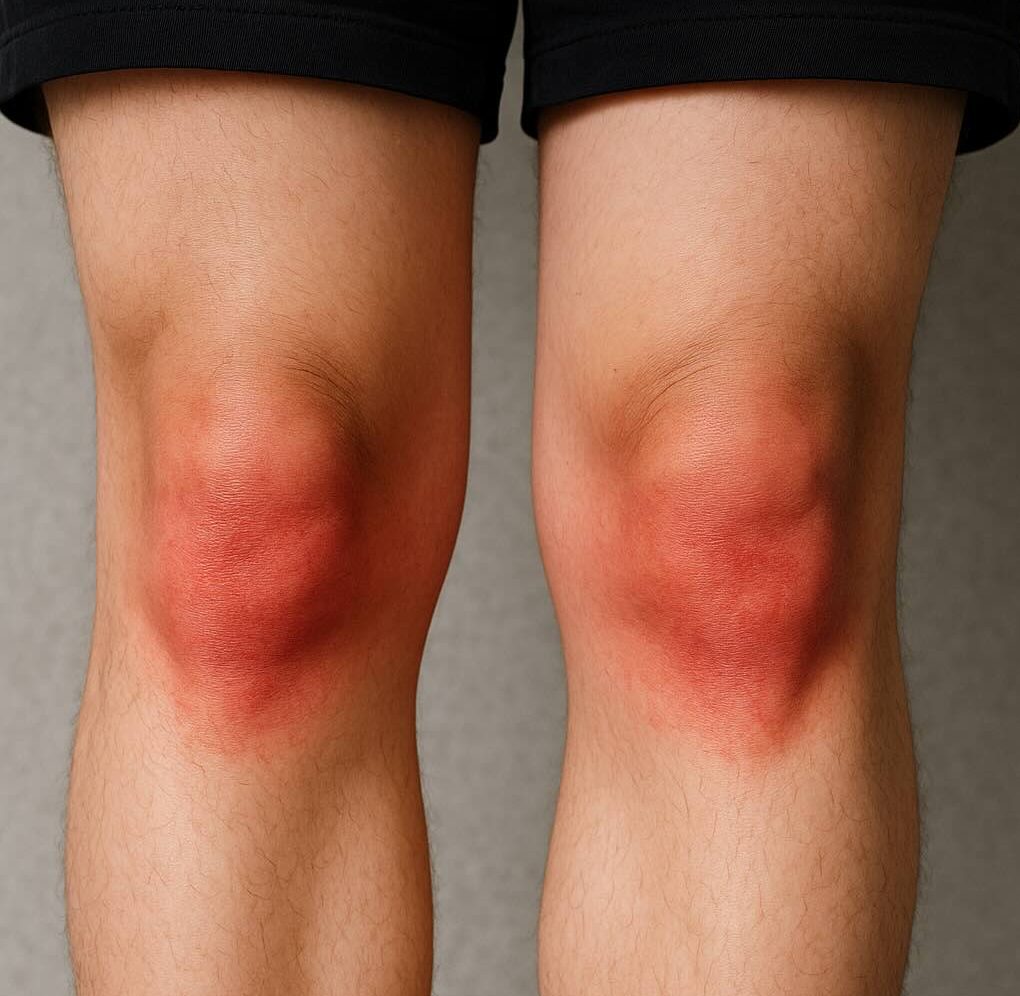
Lastly, pay attention to how you are feeling after doing an exercise with your knees. If they are hot, swollen, stiff, and achy after exercise, it is likely that you have overdone it. In this case, you would need to reduce the impact on your knees and then build back up to rigorous activity.
If you are having new or chronic knee pain and can’t seem to find the right loading patterns, professionals like Physical Therapists are experts in manipulating mechanical loading to target this “goldilocks zone” to make your body stronger without injury!
Mechanical loading is critical for knee health, but it is only one part of the equation. Continue here to Part II where I discuss how inflammation plays a role in knee breakdown!


 What you Kneed to Know
Leave a comment